|
Scenic USA - New Mexico White Sands National Monument |
|

| Photos by Cecil Whitt Wilderness Spirit Photography |
White Sands, New Mexico, is best known as the site of the world's first nuclear explosion. The White Sands Missile Range is the largest military installation in the United States, covering 3200 square miles. Noted as the beginning of the Nuclear Age, a plutonium device called Trinity was detonated on July 16, 1945. The White Sands complex went on to become the testing grounds for countless missile test firings, and is honored today with a National Historic Landmark designation.
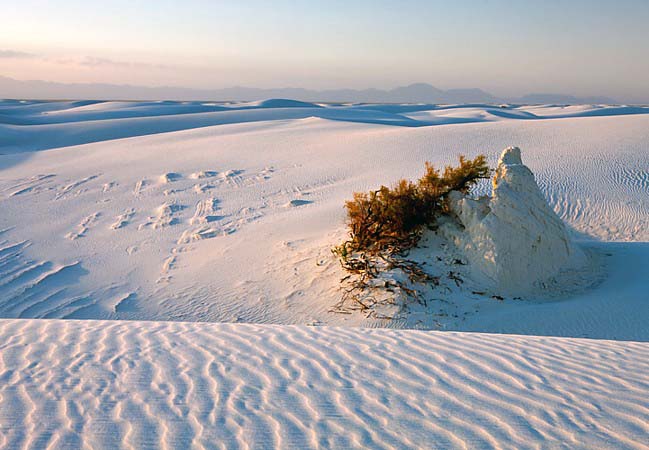
The White Sands name is best understood by visiting this immense natural wonder where gleaming white sand covers 275 square miles. Gypsum sands in the Tularosa Basin represent the world's largest dune-field of this type. Made up of pure gypsum (hydrous calcium sulfate), nearly 40 percent of the dunes are located within the National Monument.  Shifting sands, moving 30 feet every year to the northeast, make it difficult for plant and animal survival. Inhabiting edges of the dune field, 72 species of mammals and reptiles roam the Big Dune Nature Trail. Mostly nocturnal, animals most often live in underground burrows. Easily spotted against the white sand, some small animals have evolved a white coloration that provides camouflage in the desert dunes. Drought tolerate plants must also endure large fluctuations in temperatures. Not all of the parkland consists of parabolic dunes, other units are comprised of alkali flats, mesquite hammocks and mesquite dunes made up of quartz sand rather than gypsum. Although the park is open 364 days a year, missile range operations may make it necessary to close the park for periods as long as three hours. Visitors may call the park to check on closure information. (575-678-1178)
Area Map

|
Additional Points of Interest |
|
Copyright © 2021 Benjamin Prepelka
All Rights Reserved